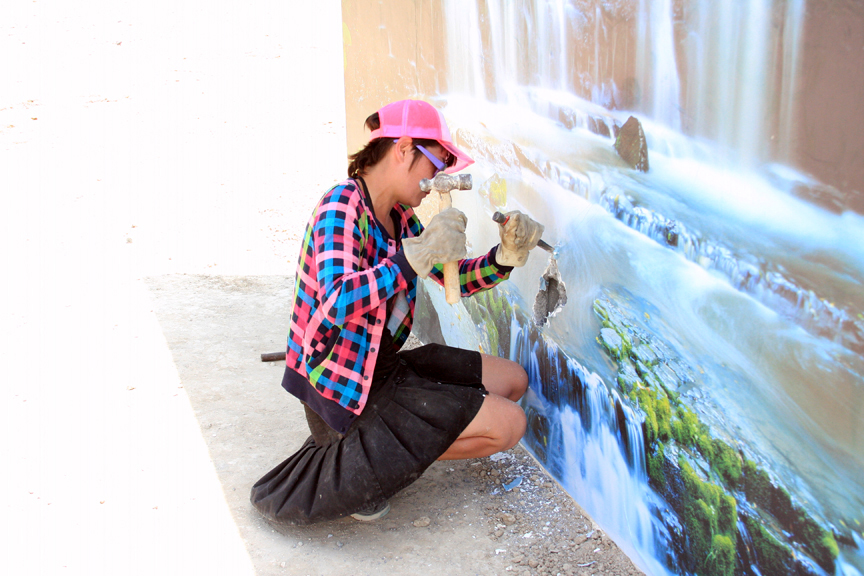
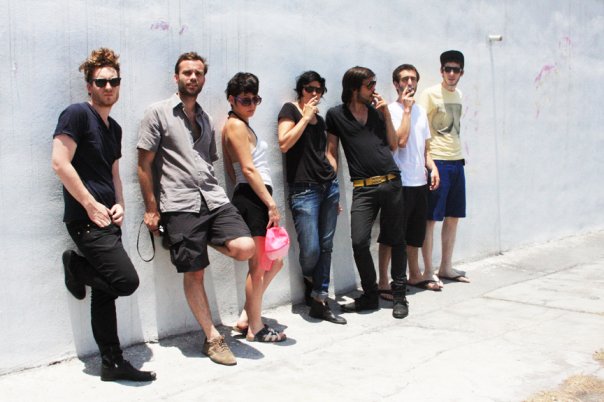

Mobile Insitu Mexico – 2009 – Seven artists invited to performed in Monterrey. One month stay. Curated by Carlos Limas with Jonathan Sullam, Tom Hillewaere, Barbara Fourneret, Emilie Pischedda, Valentin Souquet, Pacôme Beru, Ismaël Bennani.

EN
Wall
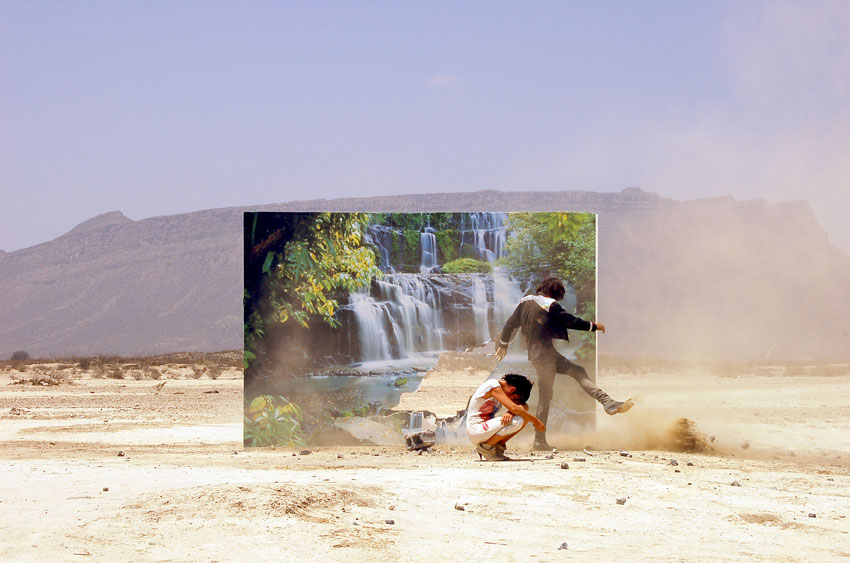
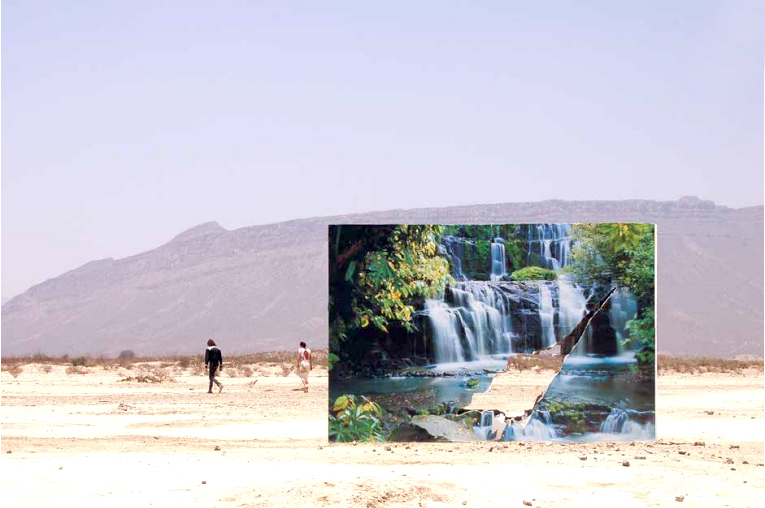
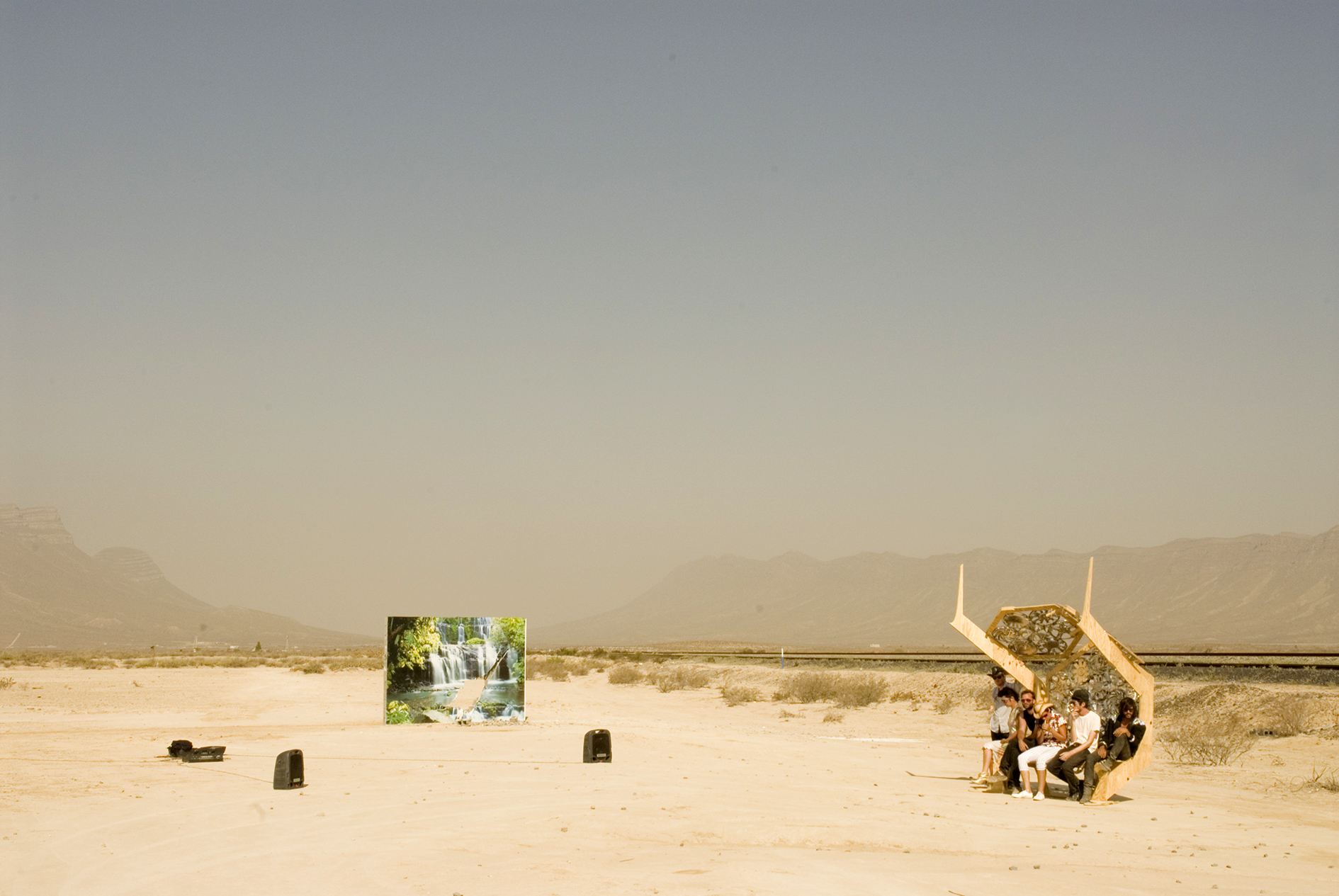
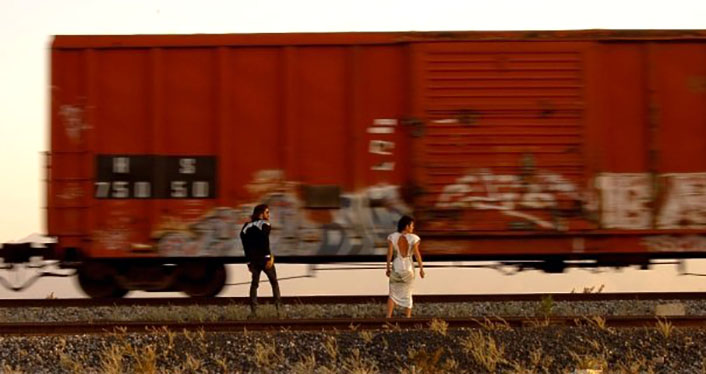
This in situ installation unfolds a striking visual illusion at the edge of a railway traversing the dividing line between Mexico and the United States, in the heart of the Mexican desert. Embedded directly in this environment, the work evokes a mirage – a fragile and illusory image – that could easily be mistaken for a blank advertising billboard, symbolizing both hope and disillusionment. The choice to depict a torrent, symbol of abundance and life, in an arid and hostile setting highlights the desperate quest of thirsty migrants traversing this area in freight trains.
The sculpture, made of rough concrete blocks and marked by time and sun, recalls the Berlin Wall, evoking the harshness of human divisions and the fragility of social constructs. This “only island of shade” in the desert thus becomes a strange place to pause, a point of respite in an inhospitable space.
The work plays with the notion of illusion and reality, questioning perception, the dividing line, and thwarted dreams. By combining a natural landscape with an industrial, worn form, it creates a striking tension, both aesthetic and political, inviting reflection on physical and human boundaries.
FR
Mur
Cette installation in situ déploie une illusion visuelle au bord d’une voie ferrée traversant la ligne de séparation entre le Mexique et les États-Unis, au cœur du désert mexicain. En s’inscrivant directement dans cet environnement, l’œuvre évoque un mirage – image fragile et illusoire – qui pourrait facilement être confondue avec un panneau publicitaire sans message, marquant à la fois l’espoir et la désillusion. Le choix de représenter un torrent, symbole d’abondance et de vie, dans un milieu aride et hostile, souligne la quête désespérée des migrants assoiffés traversant cette zone dans les trains de marchandises.
La sculpture, faite de parpaings bruts et marquée par le temps et le soleil, rappelle le mur de Berlin, évoquant la dureté des divisions humaines et la fragilité des constructions sociales. Ce « seul îlot d’ombre » dans le désert devient alors un lieu d’arrêt étrange, un point de répit dans un espace inhospitalier.
Cette intervention dans le paysage joue avec la notion d’illusion et de réalité, interrogeant la perception, la démarcation, et les rêves contrariés. En associant un paysage naturel à une forme industrielle et abîmée, elle crée une tension saisissante qui invite à la réflexion sur les limites physiques et humaines.
 BARBARA FOURNERET